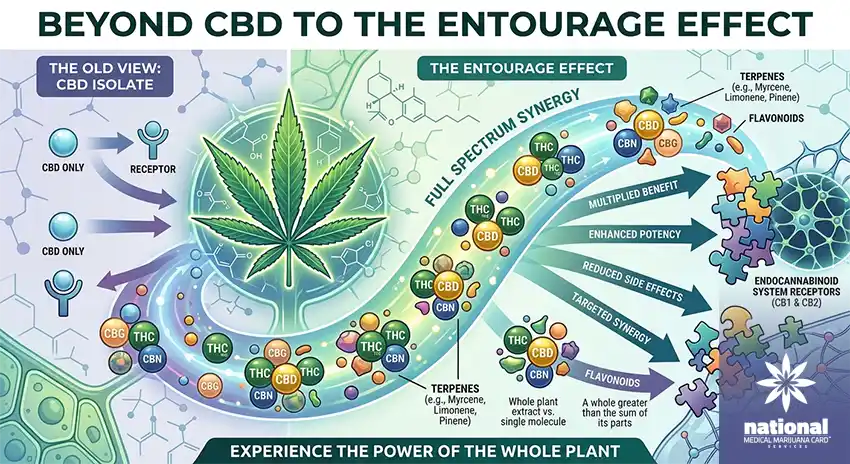
Beyond CBD to the Entourage Effect
For years, the conversation around medical marijuana has been dominated by one term: CBD (Cannabidiol). While CBD is a powerhouse cannabinoid known for its non-psychoactive relief, modern science in 2026 has proven that it is only one piece of a much larger therapeutic puzzle.
To truly validate cannabis as medicine, we must look beyond "miracle" molecules and understand the complex interaction between cannabinoids, terpenes, and the human body.
Why CBD is Only the Beginning
Research consistently supports CBD as a primary active agent for managing a wide range of conditions, including:
-
Chronic Pain and Inflammation
-
Seizure Disorders (such as Epilepsy)
-
Insomnia and Sleep Issues
-
PTSD and Anxiety
-
Opioid Addiction Recovery
However, labeling CBD as the only answer is a medical oversimplification. As state laws evolve and federal regulations shift, the focus is moving toward Full-Spectrum Medicine.
The Entourage Effect: The Key to True Validation
Modern research now focuses on the "Entourage Effect." This is the discovery that cannabinoids like THC, CBD, CBG, and CBN—along with aromatic compounds called terpenes—work more effectively together than they do in isolation.
Standardizing medical marijuana isn't just about high CBD percentages; it’s about identifying specific cannabinoid profiles (chemovars) that target specific symptoms. For example:
-
Synergistic Ratios: A 1:1 ratio of CBD to THC is often more effective for neuropathic pain than either compound used alone.
-
Minor Cannabinoids: Compounds like CBG (Cannabigerol) are emerging as potent agents for gut health and neuroprotection.
-
Terpene Integration: Aromatic compounds like Linalool (lavender) can boost anti-anxiety effects, while Myrcene (earthy) can enhance sedative properties for those with chronic insomnia.
The Path to Federal Recognition
The push for Federal Rescheduling to Schedule III is rooted in this scientific validation. By standardizing strains and proving their efficacy through clinical trials, cannabis is shedding its "alternative" label and becoming a primary healthcare option.
True validation means moving toward a pharmacy-style model where a patient can receive a specific "profile" of cannabinoids tailored to their unique physiology and diagnosis.
Frequently Asked Questions (2026)
What is the difference between CBD isolate and Full-Spectrum Medical Marijuana? CBD isolate is the pure compound. Full-spectrum products contain the entire range of cannabinoids and terpenes from the original plant, which allows the "Entourage Effect" to occur, often leading to better therapeutic outcomes.
Is medical marijuana recognized by the federal government? As of 2026, the move to Schedule III marks a historic shift, officially acknowledging that cannabis has "accepted medical use." This allows for more rigorous clinical research and higher standards of product safety nationwide.
How do I find the right medical cannabis profile for my condition? Validation starts with a professional consultation. Navigating the world of ratios and terpenes is best done under the guidance of a certified medical marijuana physician who can review your medical history and recommend a targeted treatment plan.
Copyright and Disclaimer
This website is provided for educational and informational purposes only and does not constitute providing medical advice, legal advice or professional services. The information provided should not be used for diagnosing or treating a health problem or disease, and those seeking personal medical advice should consult with a licensed physician. Always seek the advice of your doctor or other qualified health provider regarding a medical condition. Never disregard professional medical advice or delay in seeking it because of something you have read on NMMCS’s website. If you think you may have a medical emergency, call 911 or go to the nearest emergency room immediately. Neither the Company nor its employees, nor any contributor to this web site, makes any representations, express or implied, with respect to the information provided herein or to its use.
All copyrights to the NMMCS web site and its contents are the property of NMMCS unless otherwise noted. No commercial uses are allowed without the prior express permission of National Medical Marijuana Card Services.